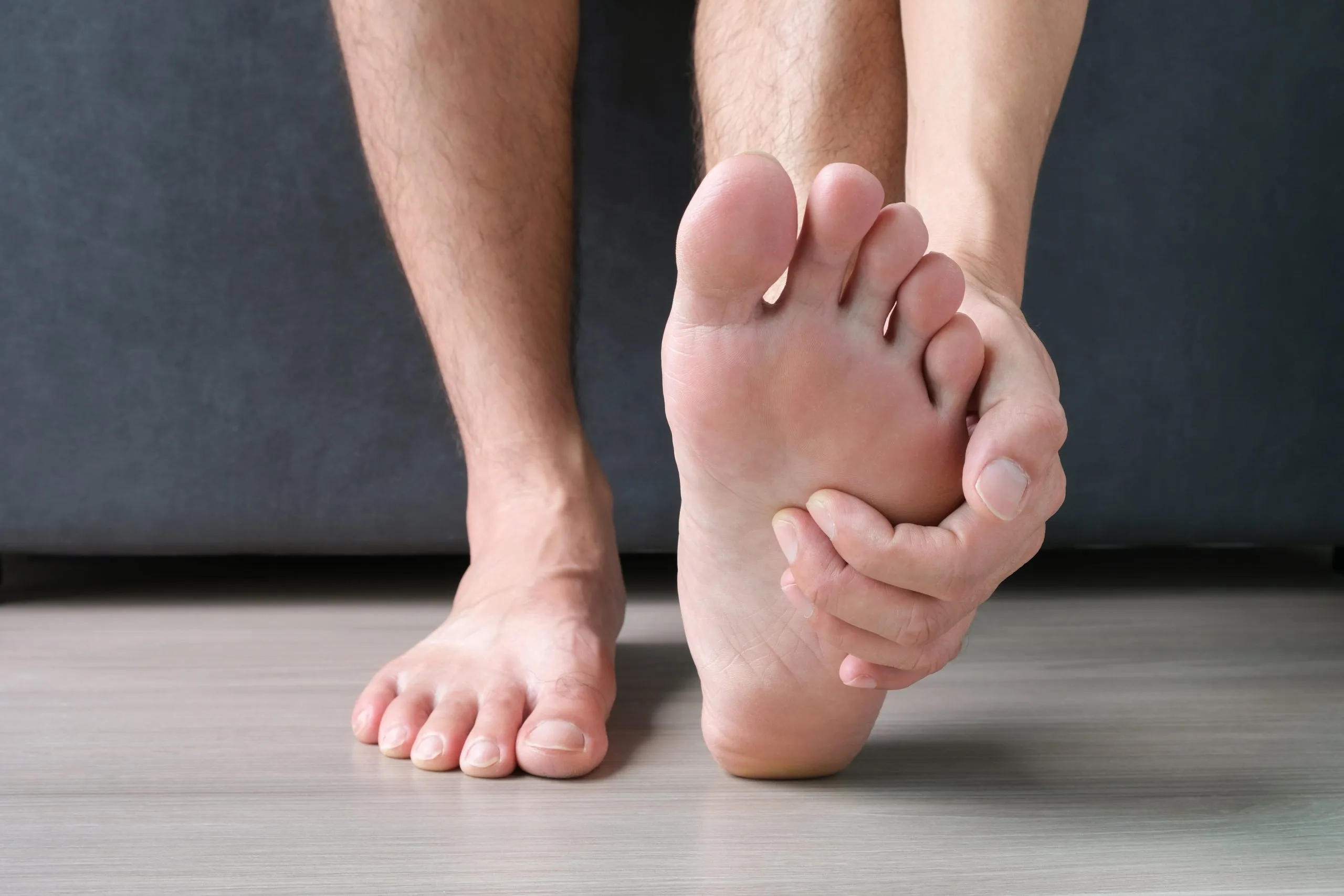
When you’re dealing with the sharp, stabbing heel pain of plantar fasciitis, finding effective relief is your top priority. While cortisone shots are a common treatment offered for quick relief, they only mask the symptoms temporarily. At Palm Beach Health Center, we focus on regenerative treatments, such as shockwave therapy, that address the root cause of your pain to deliver true, long-lasting results.
This guide breaks down the differences between managing symptoms and truly healing the tissue, helping you understand why we prioritize a corrective approach.
Plantar fasciitis is one of the most common causes of heel pain. It occurs when the plantar fascia – a thick, web-like band of tissue that connects your heel to the front of your foot – becomes irritated and inflamed. This ligament supports the arch of your foot and absorbs the stress of walking, running, and standing. When it’s overstretched or overloaded, tiny tears can form, leading to stiffness, swelling, and sharp pain.
The hallmark symptom is a stabbing pain in the bottom of your foot near the heel. The pain is often most intense with your first steps in the morning or after long periods of rest. It may ease as you move but often returns after extended activity.
Cortisone shots are injections of a powerful anti-inflammatory medication. When injected near the plantar fascia, cortisone works by suppressing your body’s inflammatory response, which can rapidly reduce swelling and pain. Patients often feel significant relief within a day or two.
However, this relief is a temporary fix. Cortisone does not heal the tiny tears in the tissue; it only silences the inflammation. Because the underlying injury remains, the pain often returns once the medication wears off. Furthermore, repeated cortisone injections carry risks, including weakening of the plantar fascia and fat pad atrophy (the thinning of the natural cushion under your heel), which can worsen long-term pain.
At Palm Beach Health Center, we do not offer cortisone injections for plantar fasciitis. Our philosophy is to provide corrective care that promotes long-term healing, rather than offering temporary solutions that can potentially lead to further damage.
Shockwave therapy is a non-invasive treatment that uses acoustic pressure waves to stimulate healing in injured soft tissues. At Palm Beach Health Center, we use it as a cornerstone of our approach to chronic conditions like plantar fasciitis. It’s a regenerative treatment designed to fix the problem, not just mask the symptoms.
During a session, a handheld device is applied to the skin over the heel and plantar fascia, delivering a series of high-energy acoustic pulses into the tissue. These waves create a controlled micro-trauma that triggers the body’s natural healing response. This process:
Increases blood flow and circulation to the area
Stimulates the release of growth factors essential for repair
Breaks down scar tissue and calcifications
Reduces pain by modulating nerve signals
Essentially, shockwave therapy jump-starts a stalled healing process, encouraging the damaged plantar fascia to regenerate and repair itself. Most treatment plans involve a series of sessions spread out over several weeks.
Non-invasive: No needles, incisions, or medication.
Promotes healing: It targets the source of the problem, helping rebuild a stronger plantar fascia.
No downtime: Most people return to normal activity right away.
Longer-lasting potential: Because it supports tissue repair, results can last well after treatment ends.
Many patients with chronic ankle and foot pain who haven’t responded to other treatments find success with shockwave therapy. The most common side effects are minor and temporary – mild soreness, redness, or bruising at the treatment site for a day or two. Because it works gradually, relief is not immediate; it builds over the course of the treatment plan.
Understanding the fundamental differences makes the choice clear for those seeking a permanent solution.
Cortisone Shot: To rapidly reduce inflammation and provide temporary pain relief. It is a symptom-management tool.
Shockwave Therapy: To stimulate tissue regeneration and promote long-term healing at the source. It is a corrective and regenerative tool.
Cortisone Shot: Relief is fast (1-3 days) but temporary. Effects can last a few weeks to a few months before the pain typically returns.
Shockwave Therapy: Relief is more gradual as the tissue heals, but the results are long-lasting because the underlying problem is corrected.
Cortisone Shot: Minimally invasive (injection) but carries risks like tissue weakening and fat pad atrophy with repeated use.
Shockwave Therapy: Completely non-invasive and very safe, with only minor, temporary side effects. It can be repeated without the same tissue concerns.
For most patients, shockwave therapy offers a far more durable solution. By stimulating the body to repair the damaged plantar fascia, it creates a lasting fix that continues well after the treatment series ends.
While a cortisone shot might seem appealing for a “quick fix,” it doesn’t solve the problem. It’s like turning off a fire alarm while the fire is still burning. For patients who want to get back to their lives without the fear of pain returning, addressing the fire itself is the only real answer.
Shockwave therapy is the superior long-term option, especially for chronic plantar fasciitis that has not improved with other care. At Palm Beach Health Center, our philosophy centers on this type of corrective care to provide a true, lasting solution.
A thorough evaluation with our team is the way to determine the ideal treatment plan. Based on your symptoms, foot mechanics, activity level, and goals, we can guide you toward the most effective approach at our Royal Palm Beach or West Palm Beach locations.
Shockwave therapy is our preferred treatment for plantar fasciitis because it aligns with our goal of lasting patient wellness. It is the best choice if:
You have had heel pain for more than a few months.
Other conservative treatments (stretching, orthotics) have not worked.
You want a non-invasive option that avoids the risks of steroid injections.
You are committed to addressing the root cause of your pain.
You want a long-lasting, durable solution.
When comparing cortisone shots vs shockwave therapy for plantar fasciitis, the choice comes down to your goals. If you want a temporary patch, a cortisone shot might provide it. But if you want a safe, non-invasive, and lasting solution that fixes the underlying problem, shockwave therapy is the clear winner. By stimulating your body’s own healing mechanisms, it offers a path to true recovery.
To find out if our corrective approach is right for you, schedule an appointment at Palm Beach Health Center and take the first step toward lasting relief.

About the Author
Dr. Matthew Symons
June 24, 2026